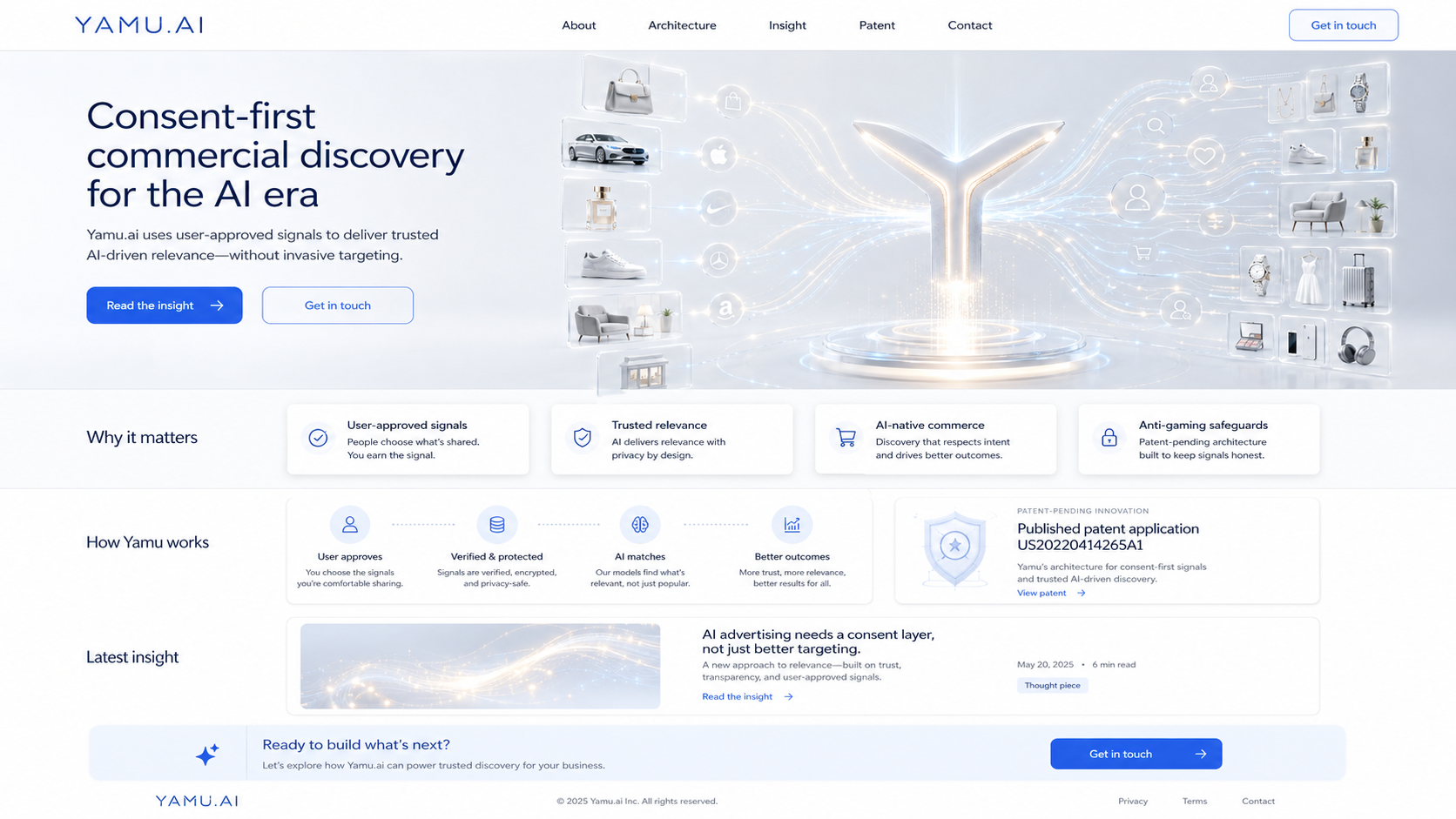
Assistant-era advertising should be built around user-approved signals, transparent value exchange, answer independence and stronger safeguards against manipulation.
The assistant relationship changes the advertising problem.
The first generation of digital advertising was built around placement. The second was built around behavioural targeting, measurement and optimisation. The next generation will be shaped by AI assistants, agents and conversational interfaces — and that changes the problem completely.
In a search engine, users expect a mixture of organic results, sponsored links and commercial intent. In a social feed, users understand that the experience is partly funded by advertising. In a conversational assistant, the relationship is different. The user is not simply browsing a page or scrolling through content. They are asking for help, advice, comparison, interpretation or action.
The opportunity is not better interruption. It is better commercial alignment.
Users often come to assistants with intent: to research, compare, buy, book, solve, learn or decide. Advertisers and vendors want access to that intent because it is more valuable than inferred behaviour or broad audience segments. But the route to that value matters.
AI-native advertising should not ask, “How much can we infer?” It should ask, “What can the user knowingly approve, and how can that create better outcomes for both sides?”
Consent alone is not enough.
Any system that creates economic value from commercial engagement must expect gaming. If users are rewarded for sharing signals, viewing offers or engaging with commercial opportunities, some will try to fake interest. If advertisers compete for approved signals, some may try to over-broaden their relevance criteria.
That is why AI-native advertising needs integrity mechanisms built into the architecture. Signal quality, engagement authenticity, vendor relevance and user behaviour all need to be protected.
The principle for the next decade.
The next phase of advertising should not be about making personalisation more opaque. It should be about making commercial discovery more useful, more trusted and more transparent.
That is the future Yamu is exploring: a consent-first layer for AI-native search, advertising and agentic commerce.