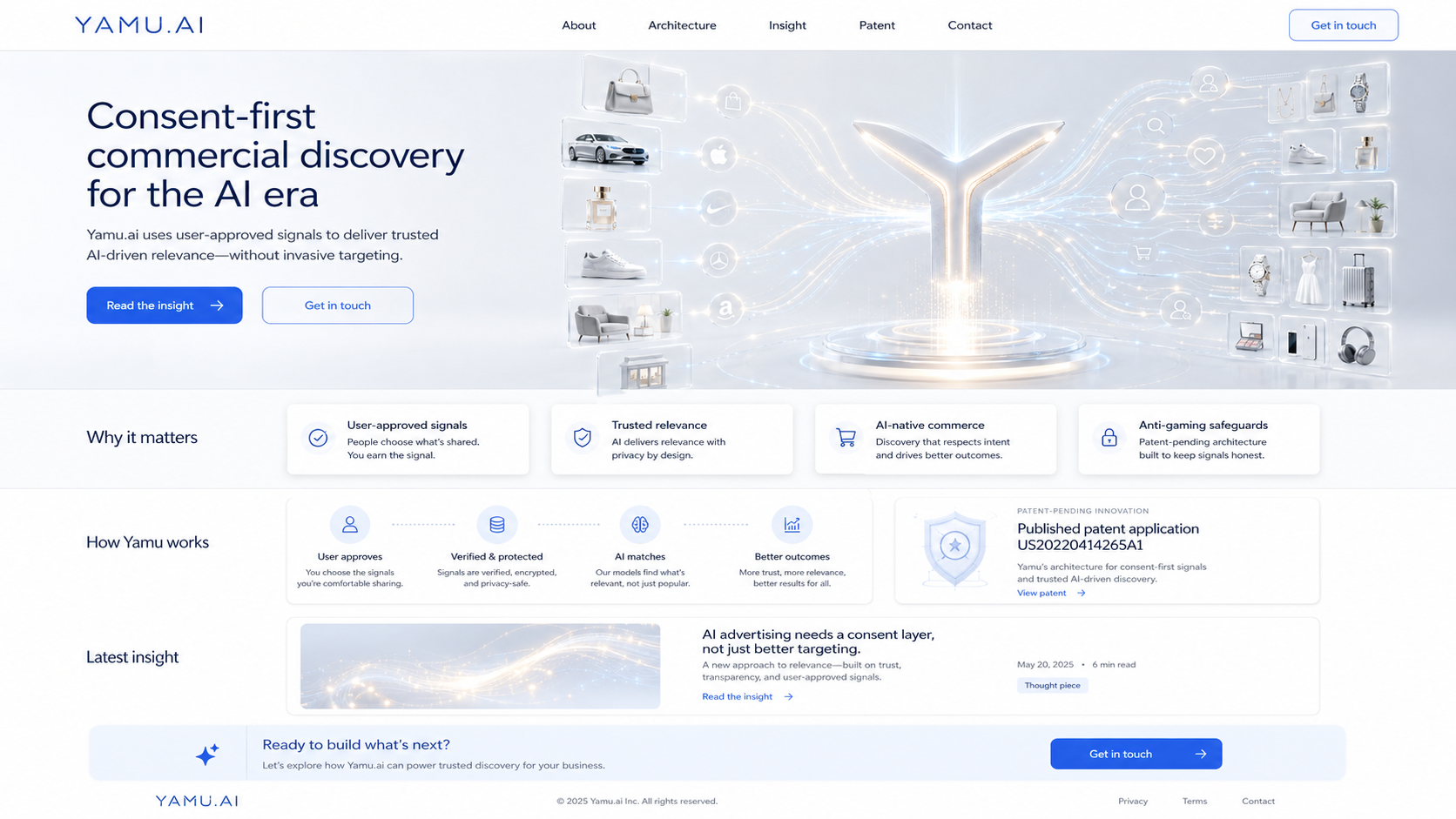
The assistant relationship depends on trust. AI advertising can exist, but it must not make users feel that answers have been secretly bought.
The assistant is not a feed.
Users engage with AI assistants differently from search pages or social feeds. They ask for help, judgement, comparison and recommendations. That makes the assistant relationship more trust-sensitive than many existing advertising surfaces.
If users suspect commercial incentives are secretly shaping the answer, the product risks damaging its core value. Advertising inside AI must therefore be designed around answer independence.
Commercial discovery needs separation and explanation.
Sponsored options should be clear. Recommendations should not be quietly purchased. If user-approved commercial signals influence discovery, the user should understand what they allowed and why something appeared.
This does not make advertising impossible. It makes the architecture more important. A consent-first signal layer can support relevance without requiring the assistant to become opaque or manipulative.
Trust is the durable monetisation asset.
In the long run, the most valuable AI advertising systems may be those that preserve user confidence while delivering measurable advertiser outcomes. That requires user control, transparent commercial boundaries, signal integrity and anti-gaming safeguards.
Yamu’s patent-backed thesis is that commercial discovery can be more useful and trusted when it is built around approved signals rather than hidden inference alone.