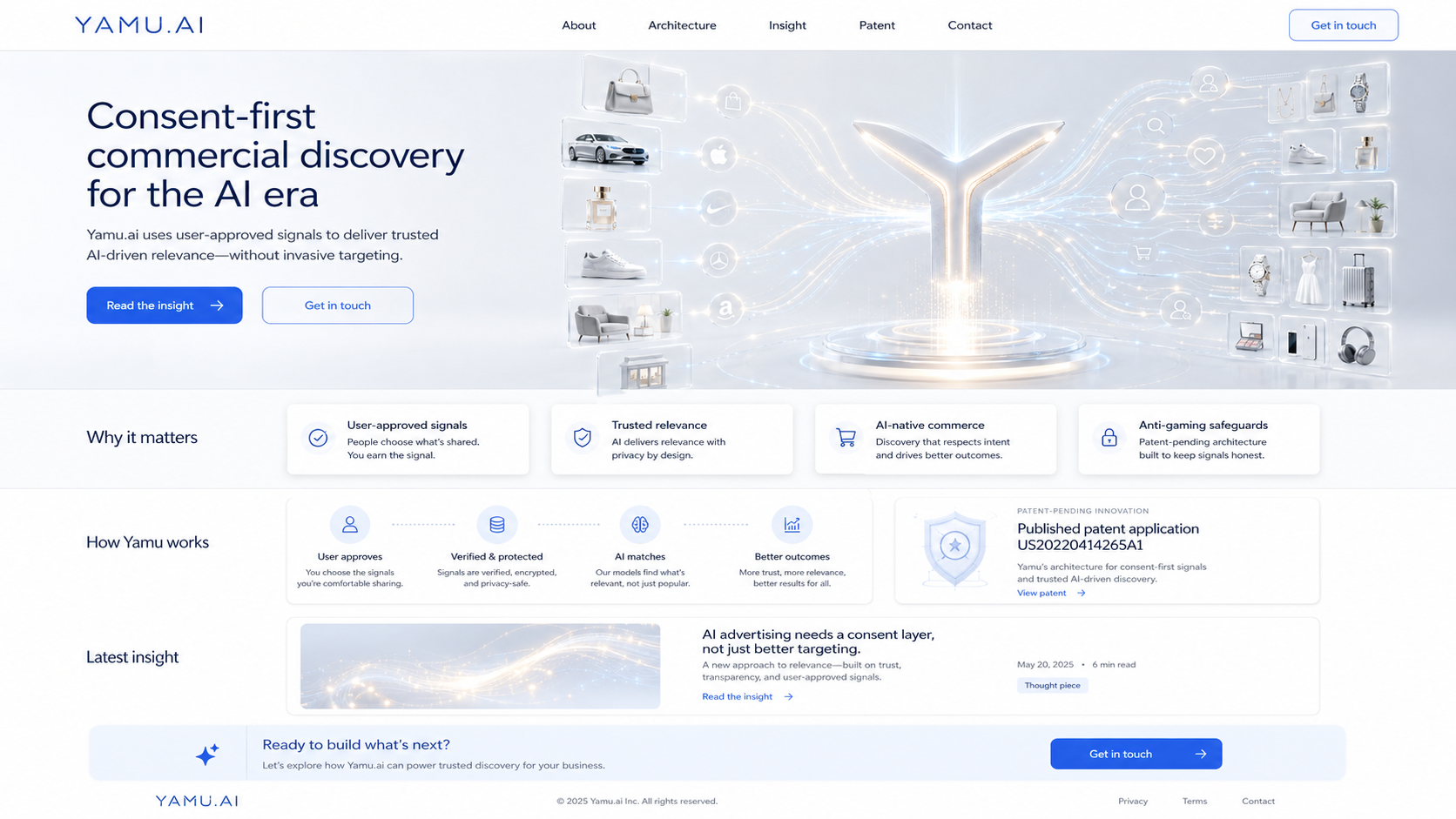
As AI agents begin to compare, filter, negotiate and transact, commercial discovery will need a clear permission architecture.
Agents will change commercial discovery.
AI assistants are moving from answering questions to helping people take action. They may compare products, shortlist suppliers, manage recurring purchases, book services, negotiate preferences or act as a filter between users and merchants.
That shift makes commercial signals more valuable and more sensitive. If a user’s agent communicates with a merchant’s system, what context is shared? Who approved it? What is commercial, what is private, and what is inferred?
The missing layer is permissioned signal exchange.
Agentic commerce needs a way for users to approve which signals are shared and for vendors to respond only when relevance conditions are met. Without that layer, the market risks becoming a race to extract context from users or influence assistants through hidden commercial pressure.
A consent-first signal layer gives the system a foundation: user-approved context, clear boundaries, relevant merchant responses and safeguards against manipulation. The patent foundation is especially relevant because it already combines approved information, vendor requirements, anonymised matching, value exchange and anti-gaming safeguards.
Why this becomes strategically important.
The platform that controls trusted commercial signal exchange may become central to agentic commerce. It can help users maintain control, help advertisers reach genuine intent and help AI platforms monetise discovery without weakening trust.
Yamu’s patent-backed thesis points to this direction: consent-based search, user-approved commercial signals, vendor matching, value exchange and anti-gaming safeguards as infrastructure for AI-mediated commerce.